
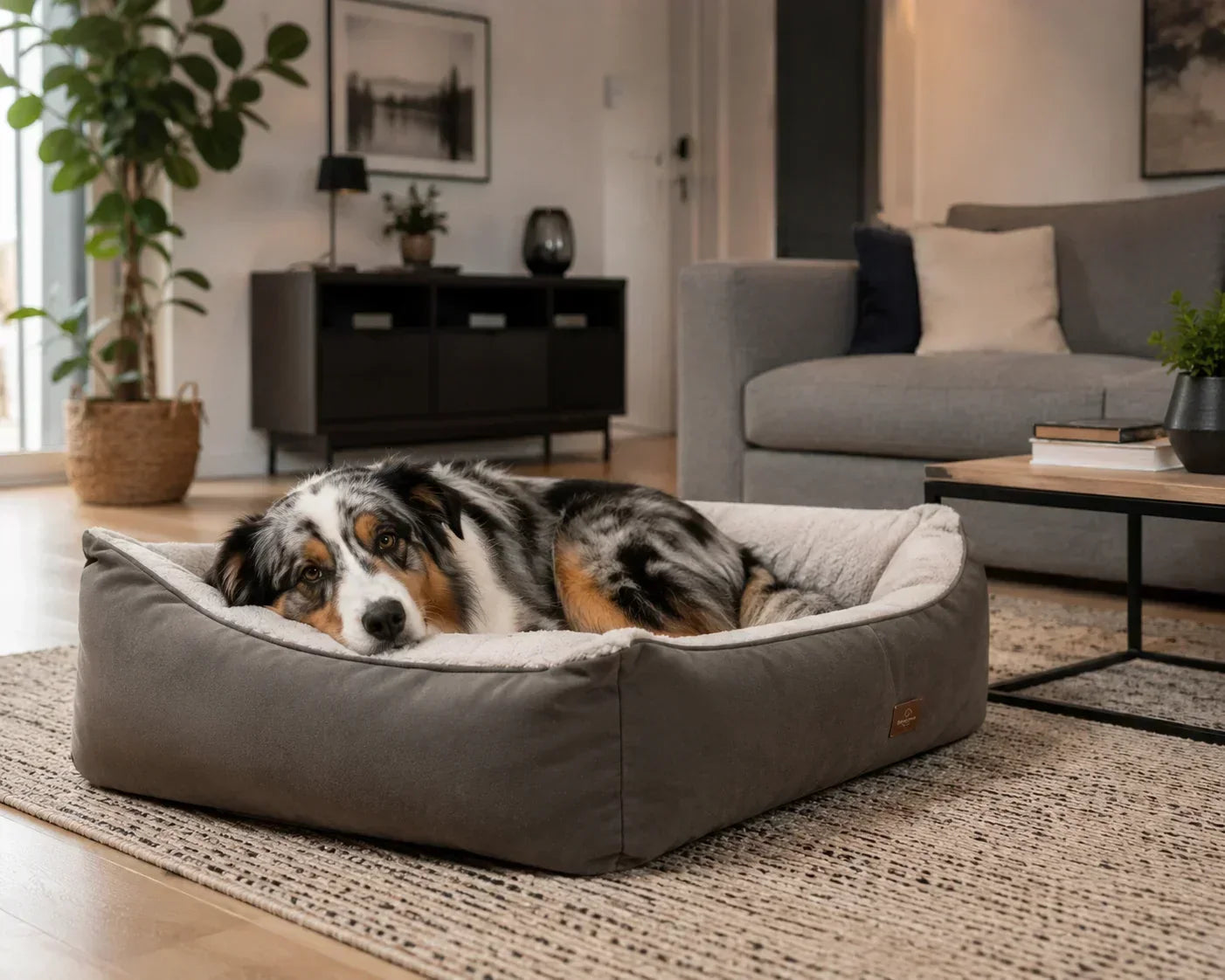
How to Create a Dog-Friendly Home
The right setup can help your dog feel more relaxed while also making your home easier to organise and maintain. From a comfortable bed and secure crate to a practical feeding station, every item should be selected according to your dog’s size, age, habits and individual needs.
Whether you are preparing your home for a new puppy, supporting an older dog or simply improving your current setup, thoughtful choices can make a meaningful difference.
Start With Your Dog’s Individual Needs
No two dogs use a home in exactly the same way.
A young puppy may need a secure area for supervised play and rest. An energetic adult dog may benefit from a durable bed and an organised place for food, toys and equipment. An older dog may need easier access to furniture and supportive places to sleep.
Before buying new products, consider:
-
Your dog’s size and weight
-
Age and activity level
-
Preferred sleeping position
-
Mobility and joint health
-
Chewing habits
-
Coat type
-
Whether your dog prefers enclosed or open spaces
-
How much room you have available
-
How easy the product will be to clean
Choosing products based only on appearance can lead to poor sizing or equipment that your dog does not enjoy using. The best solution should work for both your dog and your home.
Choose the Right Dog Bed
Dogs spend a significant part of their day resting, so a suitable bed is one of the most important elements of a dog-friendly home.
The ideal bed should allow your dog to lie down comfortably, stretch out and change position without falling over the edges.
Consider Your Dog’s Sleeping Style
Observe how your dog normally sleeps.
Dogs that curl into a ball may enjoy a bed with raised sides, which can create a more enclosed and secure feeling. Dogs that prefer to stretch out may need a larger, flatter sleeping surface.
Some dogs enjoy resting with their head supported, while others prefer an open bed without high sides.
Select the Correct Size
Measure your dog while they are lying in their usual sleeping position. Add some extra space so they can move and stretch comfortably.
A bed that is too small may be uncomfortable. A bed that is unnecessarily large may not provide the cosy feeling some dogs prefer.
Always check the external and internal product measurements, as padded sides can reduce the usable sleeping area.
Think About Maintenance
Dog beds naturally collect hair, dirt and odours.
Look for practical features such as:
-
Removable covers
-
Washable cushions
-
Wipe-clean surfaces
-
Durable fabrics
-
Replaceable inner cushions
-
Raised legs that allow cleaning underneath
If your dog regularly returns home wet or muddy, an easy-to-clean bed may be more practical than a delicate material.
Create a Secure Resting Space
Some dogs feel more comfortable when they have a defined space of their own.
A correctly introduced dog crate can provide a quiet area for resting, sleeping and relaxing away from busy household activity. It may also be useful during training or travel.
A crate should never be used as punishment. Your dog should learn to associate it with calm, positive experiences.
Choosing the Correct Crate Size
Your dog should be able to:
-
Stand naturally
-
Sit without lowering their head
-
Turn around comfortably
-
Lie down fully
-
Change sleeping position
Check the internal measurements carefully before ordering. Breed descriptions can be helpful, but individual dogs of the same breed may vary considerably in size.
Introduce the Crate Gradually
Begin by leaving the door open and allowing your dog to explore at their own pace.
You can place a comfortable cushion, familiar blanket or treats inside. Keep early sessions short and avoid shutting the door until your dog is relaxed.
Gradually increase the time spent inside while remaining nearby.
Crate training should always progress at a pace your dog can manage comfortably.
Consider Furniture-Style Dog Crates
Traditional metal crates are practical, but they may not suit every interior.
Furniture-style dog crates combine a secure resting area with the appearance of a side table or home furnishing. This can make them easier to incorporate into a living room, bedroom or home office.
When choosing a furniture-style crate, consider:
-
Internal dimensions
-
Ventilation
-
Door position
-
Locking mechanisms
-
Maximum recommended dog weight
-
Surface durability
-
Whether a cushion is included
-
Space required to open the doors
-
The manufacturer’s assembly instructions
The top surface should only be used within the stated weight limit. It should also remain clear of objects that could fall onto or frighten the dog.
A furniture-style crate should be selected primarily as a safe resting space. Its appearance and storage value are secondary considerations.
Make Food and Water Easy to Manage
A dedicated feeding area can help keep your dog’s daily routine organised.
Place food and water bowls in a quiet location where your dog can eat without being disturbed. Avoid positioning them in a narrow walkway or beside a door that is opened frequently.
The feeding area should be:
-
Easy to access
-
Away from excessive noise
-
Simple to clean
-
Free from trip hazards
-
Large enough for your dog to stand comfortably
Feeding Stations With Storage
A feeding station with built-in storage can provide a convenient place for food, treats and feeding accessories.
This may help reduce clutter and keep supplies together. Food should still be stored according to the manufacturer’s instructions and protected from moisture, pests and direct sunlight.
Check that drawers and storage compartments close securely, especially if your dog is skilled at opening cupboards.
Raised Dog Bowls
Raised bowls can make the feeding area tidier and may be more comfortable for some individual dogs and owners.
However, the appropriate bowl height and feeding position depend on the dog. Ask your veterinary professional for advice when your dog has a medical condition, digestive concern or mobility problem.
Regardless of the bowl style, fresh water should remain available and bowls should be washed regularly.
Help Your Dog Reach Higher Surfaces Safely
Small dogs, older dogs and dogs with limited mobility may find it difficult to reach a sofa, bed or other raised area.
Repeated jumping can also be challenging for dogs that are recovering from an injury or becoming less mobile with age.
Dog steps or a suitable ramp may offer additional support.
When selecting pet steps, check:
-
Maximum weight capacity
-
Overall height
-
Number and depth of steps
-
Surface grip
-
Stability
-
Width
-
Whether the cover can be washed
-
Whether storage space is included
-
How much floor space the product requires
Place the steps on a flat, stable surface and make sure they cannot slide during use.
Introduce them gradually. Use treats and calm encouragement, but do not pull or force your dog onto the steps.
Speak to a veterinary professional if your dog suddenly becomes reluctant to jump, climb stairs, stand up or move normally.
Create Boundaries Without Isolation
Dogs do not always need access to every room.
Pet gates, pens and play areas can help create safe boundaries while allowing your dog to remain part of the household.
They may be particularly useful for:
-
Puppies
-
Newly adopted dogs
-
Multi-pet households
-
Managing access during cooking
-
Preventing entry to unsafe rooms
-
Creating a supervised play space
-
Supporting gradual introductions between pets
A pen should provide enough room for the dog to move comfortably and access appropriate bedding and water.
Always check that the sides are suitable for your dog’s height and behaviour. Dogs that climb or jump may require a different solution.
Pens and gates should not replace exercise, training or social interaction.
Provide a Suitable Outdoor Space
Dogs that spend supervised time outdoors may benefit from access to a sheltered resting area.
A dog house or outdoor kennel should provide protection from wind, rain and direct sunlight. It should be placed on stable ground and checked regularly for damage, dampness and sharp edges.
Consider:
-
The dog’s size
-
Internal ventilation
-
Weather resistance
-
Roof design
-
Ground clearance
-
Ease of cleaning
-
Door position
-
Seasonal temperature changes
-
Whether a suitable cushion or mat can be added
Outdoor accommodation should never be treated as a substitute for companionship or appropriate indoor care.
During very hot, cold or severe weather, dogs may need to remain indoors. Fresh water and supervision are essential whenever a dog is outside.
Plan for Travel and Longer Outings
A dog-friendly routine extends beyond the home.
Carriers, travel crates, trailers and pet strollers can make some journeys easier, particularly for small dogs, older dogs and dogs with limited mobility.
A pet stroller may help a dog take part in a longer family outing while still having somewhere secure to rest. It should not replace suitable exercise for a healthy dog.
Before using a travel product, check:
-
Maximum weight capacity
-
Internal dimensions
-
Ventilation
-
Brakes and wheel condition
-
Safety fastenings
-
Visibility
-
Folding mechanisms
-
Weather protection
-
The manufacturer’s instructions
Introduce your dog to the product at home before attempting a long journey. Allow them to investigate it while stationary and reward calm behaviour.
Never leave a dog unattended in a carrier, stroller, trailer or parked vehicle when conditions may become unsafe.
Keep Dog Products in the Right Place
Where you position your dog’s equipment can be just as important as what you buy.
Place beds and crates in areas that are:
-
Away from strong draughts
-
Protected from excessive heat
-
Not directly beside loud appliances
-
Easy for the dog to access
-
Away from busy doorways
-
Close enough for the dog to feel included
Dogs often like to rest near their family without being in the centre of constant activity.
You may need more than one resting space if your dog regularly moves between different parts of the home.
For example, a supportive bed in the living room can provide a daytime resting area, while a crate or second bed in a quieter room may be more suitable at night.
Make Cleaning Part of the Routine
Regular cleaning helps keep your dog’s environment comfortable and hygienic.
Create a simple schedule for:
-
Washing bedding
-
Cleaning bowls
-
Wiping crate surfaces
-
Vacuuming around beds
-
Inspecting fabric for damage
-
Checking doors, locks and fastenings
-
Cleaning outdoor shelters
-
Removing damaged toys
-
Checking steps and ramps for movement
Follow the care instructions provided with each product.
Avoid using strongly scented cleaning products in enclosed areas unless they are confirmed as appropriate for use around pets. Make sure cleaned items are completely dry before your dog uses them again.
Review the Setup as Your Dog Changes
A product that works well today may not remain suitable throughout your dog’s life.
Puppies grow quickly. Adult dogs may gain or lose weight. Older dogs may need more support and easier access to their favourite spaces.
Review your dog’s home setup regularly.
Ask yourself:
-
Does the bed still provide enough room?
-
Can my dog enter and leave the crate comfortably?
-
Are the steps stable and easy to use?
-
Is the feeding station at a suitable height?
-
Are any materials damaged?
-
Has my dog’s behaviour changed?
-
Does my dog avoid equipment they previously used?
Changes in movement, sleeping habits or appetite may require professional veterinary advice rather than simply a different product.
Comfort, Safety and Thoughtful Design
Creating a dog-friendly home does not mean filling every room with pet products.
It means choosing practical items that support your dog’s everyday needs while fitting comfortably into your living space.
A suitable bed provides a place to rest. A correctly sized crate can create a secure retreat. Steps may make higher surfaces more accessible, while an organised feeding station can simplify daily routines.
The best products are those that suit the individual dog, are used correctly and continue to meet their needs over time.
At Kingswell Pets, we carefully select dog beds, crates, furniture-style kennels, feeding stations, pet steps, outdoor houses and practical accessories designed for modern homes and everyday life with dogs.
Explore the Kingswell Pets collections and create a space where your dog can feel safe, comfortable and truly at home.


Leave a comment
This site is protected by hCaptcha and the hCaptcha Privacy Policy and Terms of Service apply.